Place function before fashion – Mons Royale

Via Hazel Philips at NBR I read about local company Mons Royale – who make merino underwear aimed at boarders. Rather tellingly the title of the article was Fashion before Function.

The clothing range is a good idea – practical merino underclothing with a bit of colour and splash, along with stying that appeals (hopefully) to their target market. I’m a huge fan of merino myself for skiing and motorcycling in the cold, and it’s good to see a number of Kiwi competitors to the fantastic Icebreaker emerge.

Hazels’ article made me think about checking out and perhaps even buying some of their products, but the website made me stop that process.

Indeed the Mons Royale website is appalling – placing function well south of fashion. Even then the website design fashion displayed is dubious at best.

In the above screenshot the only obvious thing to do is to click the yellow “2010 range” tag. So I did.

Then it got tricky:

I have no idea what this is, and what I am meant to do. Most importantly I cannot see the cool gear, just a guy holding a towel or something. I eventually worked out that this was some sort of flash based book, and that I was meant to click on the pages on the bottom.

I did:

It looks cool. But that “How do I buy” phrase in red was put there by me out of frustration. There is absolutely no way to buy a garment from this flash monstrosity.  There is also no indication of price, and not even a link back to the home page. Seriously – try to find a link to the home page.

So I altered the url and went back to the home page. Eventually I discovered this:

This being the second yellow tag – “where to find it” which only becomes visible on mouse-over. It’s as if the designers have decided that they don’t really want to sell the products. And the linked Where to Find It page backed that up.

After looking for a while at the bland page (why not put the store logos there?) I noticed that three stores had “Shop online here” tags, so I clicked through. The bottom one was false as it was not an online store. The middle one yielded a home page from where I eventually navigated to this page:

The Mons Royale gear looks rather bland and certainly does not capture the flavour of the intended brand and design. The range is forgettable in this site, and the site itself is not going to drive me to buy.

But the top online store, gnomes.co.nz, was worst for Mons Royale . Again I had to navigate to the products from the home page, and again the gear was buried inside the site. However this time there were no product photos at all:

The site gave me no reason to buy, so I left.

In summary Mons Royale appears to have some nice gear, but has not asserted control of their customer experience. This is difficult to do for a start-up placing products into retail stores, but it is imperative to do it right online. Getting it right online gives full margin sales, and also makes it easy to connect with early adopters throughout the country and world. It’s these customers that will be come the evangelists for the products, and so it’s important to make things easy for them.

So what should Mons Royale do? Well I feel they need to get the basics right, so here are three quick wins:

  1. Transform the flash-book site into HTML – use WordPress or similar. Keep the glossy photos and big design, but make it easy to use and make the links you want people to click obvious.
  2. Create a simple e-commerce site, and drive the visitors from browsing to buying. Put big buy-now tags on every page.  Control the process so that customers get the branding feel that you want. Use WordPress or similar, and ask one of the many excellent home-grown web companies to do it for you – someone with a track record in local ecommerce.
  3. Over-deliver and continue to improve: track what customers are doing on the site, and work to improve sales per visitor. When you do sell a product then wrap it distinctively, send it promptly and engage them post-sale. Over-deliver to your first customers as they are the ones that will spread the word.

It looks to be a good product range – I hope the founders can get this right.

Brass Monkey 2010

It’s the first frost, and ski season starts tomorrow (at Coronet Peak), so clearly it’s Brass Monkey time. Here’s the first batch of photos, sent while sitting in the sun on a farm near Fairlie during a cat-dog stand-off.

Qantas media awards for blogging

I entered the best blog category for the Qantas media awards and didn’t make the finals. Here were the four posts I put up, with apologies to Russell Brown, Telecom XT and NBR for opening old wounds.

Telecom XT Outage – Unacceptable

Why I don’t read Public Address

NBR’s performance since the subscription wall was built

How to twitter if you are a corporation

I had always assumed that Kiwiblog would run away with the award, so am a bit sad that Dave Farrar’s site did not even make the finals. Neither did Russell Brown’s Public Address, and each of these should be perennial contenders for the award.

I didn’t expect to make it – and indeed I may have been DQ’d, either because I judged another online category or as I was insufficiently news focused.

The easier question is whether or not Kiwiblog should be there as I fully expected. There are three possible reasons for Kiwiblog not to make it: application, disqualification, or judging.

The first, and I hope most probable cause, for Kiwiblog’s absence from the finalists is that Kiwiblog did not apply for the Qantas awards. While from a judge’s perspective this is frustrating as the universe of potential award recipients is defined, it also avoids the ‘black hole’ of endless numbers of possible award winners for the judges. So if Dave chose not to compete, then sobeit.

The second possible cause is that the judge decided that Kiwiblog did not qualify under the rules. The site may have been deemed by the judge not to have met the “news related” requrements for a Qantas award, or the judge may have considered blogs as personal journals rather than harder news and opinion sites. The guidance given to judges on this was scanty, and so the judge was within his or her right to determine eligibility.

The third possible cause is that Kiwiblog was deemed by the judge to be inferior to the three finalists. That depends in part on the criteria used by the judge (these were not made clear to judges) and by the judge’s opinion.

Most likely, and by far, is the first.

The Qantas awards are the premier journalism award, and to be Highly Commended or to win an award is an honour. The online categories are still in their infancy, so I expect the quality and quantity of submissions to grow each year. So next year let’s make sure that we get as many applications as possible.

The new interest.co.nz – review

It’s early days, but the team at interest.co.nz must be happy that their new site is now up and running. It’s running on a much better platform so they should be able to tweak it a lot in response to readers.

And tweak they will need to do. Sadly for me the site has taken a giant leap backwards. I enjoyed reading the blog, but now all that lovely content seems to be buried and scattered. Buried in that only the first sentence of an article is directly visible, and scattered in that the content is spread amongst the sections. The scattering shows up interest’s problem – their daily content for each area is thin, while their content itself is rich. So I feel the news site approach is not the best for them. A good case study is Kiwiblog, which releases about the same (and this is a wild guess) number of articles each day.

I like the tagline for interest.co.nz -“helping you make financial decisions”, but the site could do so much more to do so. If I go to, say, the insurance section, then I want to see a combination of general information, widgets that help me select a provider and, say, a mother-in-law guide to insurance clauses. The possibilities are endless.

So this review in pictures is pretty critical – sorry Bernard – but the real work starts now, with constant improvements promised. I’m looking forward to where it is going.

<update – pictures now click through to larger versions>

The Home page leaves me confused to interest.co.nz’s purpose.

News. This was quite disappointing, and where I expected the blog content to be. If I want short snippets of news then I’ll go to Stuff or NZHerald. I come to interest.co.nz for more insights, which is why I’d like to see the words.

Property seemed vacant

Borrowing is all about what could be done in the future

As is saving.

So many obscure terms – I wonder what they mean?

Interest.co.nz should be the definitive guide to NZ financial institutions. It’s not (yet).

Insurance

So, Lingopal, you have 208,000 search responses

I was happy to see Lingopal returned 208,000 responses on Google. That’s pretty good right?

Well – it is, but it’s pretty humbling when compared to some other products.

I expected we’d be a lot smaller than “Sex”, “drugs” and “rock and roll”, and “Avatar” and “Apple” had great publicity. But “iPad”, which  didn’t even exist as a brand before this year, is approaching the popularity of drugs. Meanwhile Avatar and the iPhone are becoming almost as popular as sex.

So we have a long way to go.

Regardless – the reason for this post is to announce that we released 45 new iPhone applications in the Lingopal range – and they are all free. They are Lite versions of the 44 target language apps, along the Lingopal 44 (everything) application.

Try them out.

Welcome to Cadimage

I’ve just joined the board of directors for Cadimage, joining majority owners Campbell Yule and Tracey Gatland. Actually – there are three companies involved but one smart team.

Cadimage subsidiary Graphisoft NZ resells and supports ArchiCAD, which is the most popular CAD program used by architects here. It is pretty cool.
archcad

Graphisoft supports the industry in NZ in a few ways – but the one I like the most is the annual sponsorship of the New Zealand Institute of Architects Student Design Award. The winner last year, Simon Harrison, apparently designed a ‘neighbourly high-rise building’, putting urban spaces into the building itself. The runners up moved out of their flats into an old gallery to complete their installation – crazy stuff. It’s a great award, and the finalists and winners also send a fantastic signal to employers in what are pretty tough times for new graduates.

CAD has certainly come a long way since I played with a brand new program called Autocad on an IBM AT back in the day. That computer had a new fangled thing (for PCs) called a hard disk drive. Today the programs are immensely powerful and probably dangerous in the hands of someone like me.

The latest release of Archicad, for example, is all about better collaboration between architects and with engineers. It lets engineers use their program of choice, such as rival Autocad’s Revit Structure, to work on Archicad projects. The engineers make sure the buildings stay up – while the architects make sure we actually want to buy and use them. (Clearly I’ve already gained a deep understanding of this industry.)

The bit I’m excited about is that Cadimage develop and sell worldwide a range of add-on tools for Archicad – these are included free if you buy in NZ.
tools
The tools help architects be more productive by making it easy to do things like extrude shapes, build doors and windows and annotate their work. Cadimage sells them to a growing list of customers across the world, building from a vibrant Archicad community. Our aim is to help architects the world over to focus on delivering their vision using the easiest and best tools around.

It’s great to join an already successful company, and I am looking forward to understanding the business more and helping them with the challenges of growth.

I’m on a learning curve, but rest assured I won’t be producing any architectural drawings any time soon. Or later.

NZ Government’s $321m for technology fails to help

I’ll use three companies where I have equity and active involvement in to critique the announced $321m new funding for Research Science and Technology in business. In short the program will help none of the 10 or so NZ companies that I am involved with.

While it may work for larger companies this program does not recognise the significant role of tiny companies in driving research and in commercialising technology.

MyTours is a startup founded by Glen Barnes (@barnaclebarnes). We have spent a number of months developing our signature product, which allows museums, city councils and tour guides (and anyone else) to create their own tour iPhone application. You can create your own right now, or check out the Wellington City Council Welly Walks application.

Pacific Fibre is a much larger undertaking, where we are raising USD$500m, selling capacity and engaging with vendors to try to build and operate a 5.12 Tbit/sec cable connecting Australia and NZ with the USA. We will have no revenue until the cable is lit in 2013.

Texmate is an R&D driven company that specialises in developing control systems that go into other companies products. Our revenue is between $2m and $3m each year, and we spend over 10% of our revenue on pure R&D. We also perform bespoke design and contract manufacturing for a growing and very interesting client base.

None of these companies will qualify for any help under the Government’s new funding.

MyTours has no revenue, and so despite all of our efforts being R&D driven we simply do not qualify. There used to be a program called Enterprise Development Grants for Market Development, which would have supported our current efforts to sell at Museum conferences and the like, but this was canceled as NZTE was directed to focus on bigger companies.

Pacific Fibre has no revenue, and nor are we conducting any R&D. The cable will of course use new technology, but that technology is provided by the vendors, and we will select vendors partially based on that. Pacific Fibre will help Research, Science and Technology, but with no R&D going on there is as yet no case for these sorts of funds.

Texmate is just too small – failing to make the $3m threshold although our over 10% of R&D spend easily exceeds the 5% x $3m minimum. We spend more on R&D than qualifying firms will need to, and indeed spent a lot more on R&D in the past, but had to reduce spend and staff after we lost some NZTE funding. However at, say, $250,000 spend the maximum we would get under this program would be 20% of that, or $50,000. That’s a good amount of money, but much less than we need to employ an extra person, and pretty small compared to the pain of the process.

However that process is yet to be defined, and we could yet be surprised. We’ll pass the revenue threshold pretty soon given our recent growth:

There will be a short process to assess applications and award funding. Successful applicants will receive funding for a period of three years which should provide them with certainty around the level of support for their R&D investments.

The three year period is interesting, but this flies or dies on the bureaucracy required to obtain and retain the grant.


Successful applicants will be able to manage the ways in which the grants are used, provided they meet certain conditions.
The launch of the grants is planned for October 2010. More information on how the grants will work will be available closer to that time.

The devil will lie in the details on this one – I’d resist going for any money that has strings attached that allow the Government to direct whether to invest in one kind of research over another.

There is also a voucher program to match university talent with firms that do not have research capability, which is not useful in any of these situations.

My stock answer, I’m afraid to say, is to distort the tax system, and to allow benefits of some kind for R&D expenditure.

WSJ Upsell – Go Pro now

A very clever move by WSJ.com, who have introduced a way to eek more money out of subscribers.

It’s WSJ Professional Edition – and which professional cannot resist having their employer pay the $25 extra per month to get these extras:

Frankly those extras should be included with the WSJ subscription, and this is simply a way to price discriminate. But I confess an admiration for the way the upsell works. Included is a more powerful search feature, which covers multiple sources – some that are also subscription based.

a better company search..

and – well that’s about it. This is a new industry page, but really there is not much here that shouldn’t be here already.

The clever thing is that the WSJ is the business paper of record, and many readers will feel obliged to upgrade. It’s easy for those readers to spend their company’s money, but still totally optional so that readers like myself will not feel too left out.

So now there are 3 levels of price – free for a few articles, $155 for online only subscribers and an extra $300 per year to make $455 for Pro subscribers.

So – will other online media move to offer readers to Go Pro? Who knows – but the industry will watch eagerly.

I do think it is important that the WSJ is adding functionality without anything taking away from ordinary subscribers (I hope). It’s also good that the WSJ has something valuable to sell and readers that need no excuse to spend more money.

How not to survey social media, and how to recover

You want to run a survey on social media – so you ask give StopPress a chance to ask their readers for questions.

Unfortunately the commentators have a different take on your great idea – and accuse you of firstly not being social media experts and secondly of being lazy. It doesn’t help that you don’t even have a form or forum on your own site for people to use, and not did you even bother to write a blog post on your own site to gather responses. It really doesn’t help that have blog posts titled “In social media just like in PR, there’s no such thing as bad publicity” (there is) and “Social media marketing is not easy?!?!.”

It’s a bad situation made worse by the comments that appear in the StopPress article. Many of the people commenting really know what they are talking about, and as yet there has been no response from the Fast Forward agency who are doing the survey. Let’s have a quick look at some of the fall out and then ask – how could this be done better?

First the very amusing Batman used wonder-tonic to change the website to look like this. It was my first impression of FastForward:

Then some other commentators asked some questions – like Gerry Kookmeyer:

“Stoppress is an obvious vehicle to elicit response to marketing related surveys but I can’t believe a company that claims to be an expert in social media is actually asking us to come up with the questions. Is this a case of stupidity or laziness?”

and Dave didn’t like self-professed experts

“Unless you can show us REAL case studies of your own work – please don’t call yourselves experts.

We’ve all had enough of the direct marketers, copywriters, media planners and journos who setup a Twitter and become a ‘guru’.”

and Courtney Lambert (@cjlambert)

“I would also like readers to turn up to my work, do my job for me, and I get paid. In the spirit of sharing, I’ll tell you how I spent the money. Top five people ‘doing my job for me” get to do my job for me!”

There is plenty more – read the comments yourself.

I checked out the real Fast Forward site as well. The site was very basic and included a few charts – like this one, which has a catchy name:

The page on Social Media tools was out of date – with Bebo rating a mention, Twitter (100m users, 70k applications, over 1 billion tweets/month) getting short thrift and the largely irrelevant Second Life (maximum ever online 38,000, members 18m) gets good airplay.  It’s hard to stay on top of social media as it moves so fast, but if you are going public to the community then you do need to make sure you are pitch perfect.

How to do it better

Fast Forward should have done three things – and still can:

1: Get out there and engage with the comment, twitter and blog streams. Try to turn the conversation around and let people understand that this is a genuine opportunity that can benefit them, that you are seeking help from experts and that you are not professing to know it all as they portray. Help them understand that they can take advantage of the free survey and get their questions in.

2: Create a comprehensive blog post on the Fast Forward blog site, and explain the survey goals, the sampling method, the target groups who will be surveyed, the questions that are currently in the instrument and how the results will be presented. Ask for feedback on the existing question set and the whole approach, and change it continuously in response. Post comments over at StopPress and other forums referring to the post.

3: Update and upgrade the Fast Forward site, firstly systematically and quickly bringing the content up to date. Fix the basic usability stuff – like linking to the main site from the blog – or just replace the entire site with a WordPress.com blog in the meantime, using pages for the main site (that’s all it is) and so forth. Get a designer to help you update the look and feel, or at least use a standard WordPress template, like Vigilance which you used for your blog. Progressively add functionality that will let you engage your clients and the community in a conversation, and above all keep the site up to date.

Copyright Bill submission

I just made a submission to the Select Committee reviewing the Copyright Amendment Bill. You can too.

Here it is:

The bill is much improved from previous versions, and I thank the committee for that.

Like the other co-founders of Pacific Fibre I was driven to start the project by a sense of frustration at the digital divide between New Zealand and the rest of the world. I believe we will be left behind until we live in a country where high speed uncapped data, wireless or wired, is a fact of life, where internet access is pervasive and all of our devices are connected continuously. We seek to help NZ get to this vision. It is therefore frustrating to see a bill that drives us in the other direction.

(I write for myself not for Pacific Fibre in this submission)

I wish to object to the concept of disconnection being a reasonable penalty.

Internet access is increasingly a basic utility for everyone. The internet generation grew up knowing that is is always there, and even I, over 40, cannot function in society or work without it.

I use my home internet connection almost constantly for work and leisure, including for delivery of media such as television and movies.

I spend more time using internet telephony and video services than I do my cell phone, and have not connected a home telephone for years.

While it can be difficult to keep up with the latest social networking craze, it is important that everyone has access to these sites so that they can remain a part of their society. This is particularly true for younger people, who are those most likely to be affected by disconnection.

In short disconnection removes the right to work, to communicate with friends, to participate in society and even to make online submissions. It is also ineffective as a deterrent for the biggest offenders, who will use relatively simple methods to disguise their behaviour.

At worst disconnection may even bring a risk of accidental death – perhaps someone in trouble who has no other means of communicating, or someone who requires urgent access to medical information, or simply an alarm system that fails to operate.

I do believe that we should have a very tough penalty for the worst offenders – and if removal from society is to be that penalty, then let us use prisons for doing so. The punishment should relate to the crime.

Many thanks for the opportunity to submit on this bill. I would welcome the opportunity to appear before the committee.

Lance Wiggs

Wellington

Unleash those cabinets please

A surprising puff piece from Chris Keall in the NBR sings the praises of Telecom’s Chorus Division’s cabinet roll out:

The Telecom division is now half way through its government-mandated project to roll-out 3600 roadside fibre optic cable cabinets around neighborhoods nationwide. Each shortens the distance that data has to travel over an older copper line on its way to a phone exchange.

The aim is to give 80% of New Zealanders access to a 10Mbit/s to 20Mbit/s internet connection by the end of 2011.

Costing north of $1 billion, it’s the largest telecommunications infrastructure project currently under way across Australia or New Zealand.

While it’s great that Telecom are spending money on infrastructure my understanding was that cabinetisation was less than optimal.

I was cabinetised recently – I found out when my internet disappeared and connected that event with the chap playing with wires in a box down the road.

To reconnect I needed to downgrade from naked ADSL 2.0 (no phone number required) to an ADSL 1.0 product which required that I start paying for a telephone number. I have yet to plug in a phone, and resent paying the extra dollars each month.

I’m a decent distance from the exchange and as xDSL degrades over distance the cabinet process worked, and my average connection speeds went up.  I now get 12 MBPS from my house to to the local Wellington server – so thanks Chorus.

But how good it would be if I was able to use an Orcon ADSL 2.0 connection, and not have to pay for a phone line?

So Chris – I have a couple of questions – maybe you can answer them, or maybe Telecom and Chorus can next time you chat:

  • As I understand my ISP, Orcon, cannot put their own ADSL 2.0 (or VDSL for that matter) inside the Chorus cabinet – is that right? (I actually don’t know)
  • Indeed are competitors able to get unfettered access to these cabinets?
  • Will those cabinets support delivering fibre to the premise? I’d really like really fast two way connectivity.
  • Was this really a government mandate as the article says – or just Telecom’s way of delivering to a broadband mandate?
  • Can anyone sign up to a Telecom service without committing to a 2 year contract?

Never surrender Air New Zealand

Yes – I know the trans Tasman fares are pretty low, making it hard to compete.

Yes I know that code sharing gives more flights.

But I also know that Pacific Blue is not Air New Zealand, and when I want to fly on Pacific Blue I book Pacific Blue.

I also know that merging the flights of the two airlines means less competition and higher fares across the Tasman, even if you somehow manage to say that it will “stimulate a new wave of competition in Australasian aviation”

And finally I know that you’ve tried this before Air New Zealand, and failed. It was hugely distracting during those years you tried to link up with  Qantas and I guess you’d rather just not talk about Ansett.

But the worst part of Air New Zealand’s latest attempt to forge a trans-Tasman alliance is that the best airline in the world, has absolutely no need to do so. Air New Zealand eventually out competed Qantas domestically, and the pathetic JetStar is all that remains, and they can do the same with Pacific Blue.

So yes – I’ll be able to use Air New Zealand’s website to book a flight to Perth via Melbourne, flying Air New Zealand and Pacific Blue. And I’ll be able to book to fly from Sydney to Palmerston North (though I am not sure why) using Pacific Blue and Air New Zealand.

But I already book trip like that. Indeed we customers with online access or travel agents have no need for airline alliances any more, as it’s so simple to buy good value one way fares on either airline. So where is the value?

The value is in one place only – and that is in reducing competition on the trans Tasman route, and that’s not giving us a fair go. The third and fourth components to the deal are the ones that hurt the customer:

“3 Revenue generated across all Tasman sectors currently operated by either airline, or which may be developed under the agreement, will be allocated between the two carriers, and;

4. A lounge co-operation agreement that will ensure lounge access to qualifying guests of either airline.”

Revenue is allocated – so there is no incentive to out-compete on price or, scarily, on service. Meanwhile those AirNZ lounges will be filled to overflowing, as will the Virgin Blue ones. That’s not great a customer experience (or an inspiring journey) for anyone.

I hate to think of all of the management time and legal fees that will be committed in this hopefully hopeless cause for code sharing. The ACCC has grown some teeth recently, and you’d think the commerce commission would see this in a poor light as well.

So please Air New Zealand focus instead on out-competing Virgin Blue, and beat them in on the web, in the airfields, and with ever growing strength and confidence in the air.

And never surrender to code sharing on your most important local routes.

Your time is nigh Ticketek. React or die.

Been to this site recently?

Not many have. Just 6500 visitors a day visit Autotrader, a lot less than the over 140,000 per day average that visit Trade Me Motors.

Autotrader lost because everything was just too hard and too expensive. Their business practices were inherently expensive and unfair to dealers, and the process was painful to sellers and customers versus the ease of Trade Me. They were unable to adapt to the arrival of the internet, and when Trade Me deigned to pay attention to the market they soon faded away.

Ticketek is in the same situation. They sell 10 million tickets each year across in Australia and New Zealand, and do so in a way that seems to make people hate them. I certainly resent ever having to give any money to Ticketek – they seem to go out of their way to make the buying experience painful and expensive.

You represent a band. Go ahead – get Ticketek to represent you. Start with the website.

I can’t find a way. It seems Ticketek signs venues not acts, but even as a venue I can’t find a way into that site. And there is plenty else wrong with that page, even if you like a lot of blue. The logo refers to Ticketek.com, which is a gateway site – ther eis no real site at Ticketek.com, just some faded dreams.

The links at the top of the homepage are over two lines and with two different designs. Moreover they link to MSN, Bing, and, incredibly, Autotrader.

The buying process is disingenuous. First there is the note underneath ticket pricing that states “service fee may apply.”

What it should say is “We should include our outrageous fees in the advertised price under NZ law, but this little sticker says we don’t have to. Oh – and we’re kidding when we imply that fees may apply – fees always apply”

The first fee is delivery fee, which you have to pay as there is no online option:

Because it costs $8 to print a ticket out and put it into a stamped envelope. Automatically. And it costs  $8000 to hire people and print tickets for the 1000 tickets that people pick up at the venue.

Finally there are all the other fees. I declined to find out what they were because I had to register to continue – and was confronted with this screen of transaction death:

Enough.

Ticketek dominates the space because they have the contracts with the event holders sewn up. Their usability and values can be horrific but if their venues get the acts we want to see, then we will suffer accordingly.

But Autotrader used to have all of the motor vehicle dealers sewn up as well. Trade Me, through Autobase, had to approach every one of them – and slowly they moved away until the floodgates opened. They moved away because Autobase and Trade Me were easier to deal with, cheaper and a lot more effective at selling cars.

Enter EventFinder. They have been around for a bit, and it’s a friendly experience to use their site as a buyer:

They charge just $2 service fee for this Phoenix Foundation gig.

However they still want me to register, though the screen is not so intimidating.

So I gave up as well. I won’t get to see the SF bath house just yet.

A quick aside – a while ago I wrote about not making customers register as they go through the buying process, using Ascent as the case study. Well MightyApe actually tried this out after reading that article, and saw sales rise by a significant percentage. (Dylan said I could not quote the actual percentage, but it was a good one).

If you’ve read this far and you have a register screen on your site before allowing customers to buy, then why not A/B test this? Give it a go, and do let me know down the track how it works out for you.

I suggest the folks at EventFinder try it as well. The trick is to ask only for the details you need to deliver a ticket, and to do that at the last possible moment of the transaction. Get my email address for sending the voucher, my street address for the credit card authorisation and that’s it. When all is done you can whether I would like to add a password to save details for next time. Don’t call it registration though. You can separately ask whether I want to be spammed, I mean, added to your email lists.

Anyway – the feel of EventFinder is a lot lot better than Ticketek, but the real news is that they have made it dead easy for event providers to sell tickets. Introducing EventFinderPro, which is at the url of SellTicketsOnline.co.nz for now.

It feels right. It feels fair.
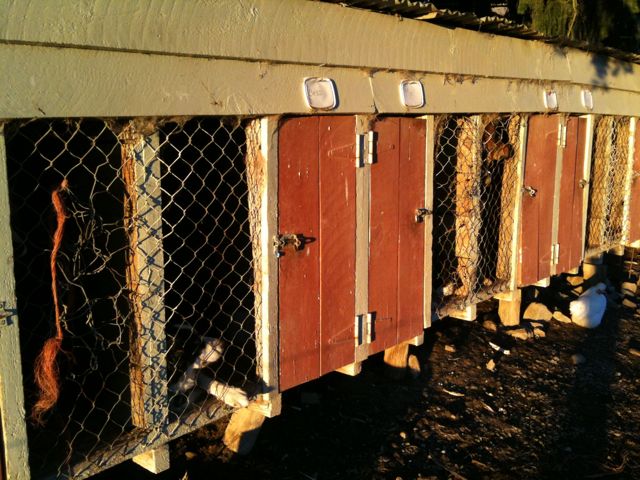
It seems the sites are providing a better service to sellers, lowering the costs of delivering that service and providing a massively better customer experience for buyers. (They syndicate the event listings through several other sites) They are aiming at the smaller sellers first, but getting increasingly professional. Sound familiar?

They charge sellers $1 per ticket sold. I have not reconciled that with the $2 that the customer is charged for the Phoenix tickets though. Will they still charge customers that fee?

They are implying that Ticketek is taking money from sellers in a variety of ways, and not all of them pleasant. Meanwhile EventFinder is front and center about their value proposition to sellers and are attacking Ticketek at the point of customer pain:

On EventFinder free means free. I hate to think what comped tickets cost on Ticketek.

EventfinderPro also seems to have lovely tracking charts for sellers, and pay the next day. They also appear to be able to ramp up their product for bigger venues – with scanners and the like available. I’d use them if I had an event to sell.

So Eventfinder seems cheaper, faster, simpler and a darn sight more fun to deal with than Ticketek.

While Ticketek has the venue market now, they have been treating buyers and sellers poorly, and the tide of frustration is getting ready to break. If Eventfinder plays this right, and Ticketek, as I suspect, are institutionally incapable of changing, then it is just a matter of time. They can rect, but that reaction will need to be to move to where EventFinder alredy is, and they will see a loss of revenue as they do it. The alternative is to hang on to a business that slowly fades away.

Ticketek has just 225 venues across Australia and New Zealand, and it will get progressiviely easy to switch those venues over to EventFinder as time goes by. EventFinder will need a strong sales effort and patience to make this happen.

EventFinder’s cost to serve venues is lower, and they take less money from customers and venues and their website makes it easier to buy and sell tickets. If they win they will help reduce the real cost of tickets for customers, put more dollars in the hands of venues and acts and fill the clubs and stadiums. And wouldn’t that be a good thing.

At some stage the economic model of Ticketek will collapse, they will thankfully disappear, and we can all start going to concerts again.