Idiot taxes mean business opportunity

A while back I wrote about Dick Smith being a stupid place to buy stuff.

The cheapest HDMI cable you can buy on sale at Dick Smith, with the 15% discount, is a staggering $55.23.

Despite a Dick Smith staff member’s comment on the post

“I work there and I will admit you can get pretty much anything we sell cheaper on the internet”

…Amnon, amongst others, commented that there are in fact some things that are cheaper to get from DSE, but it still leaves the mystery of the $55 HDMI cable.

Now from an interesting source comes an answer – and it makes sense. DC based political blogger Matt Yglesias picked up on the notion that the HDMI cables are an idiot tax (or information tax). Actually Matt got that from Alex Tabarrok:

My best guess is that this is an unusually strong version of the hidden fee model of Laibson and Gabaix. In that model, firms overprice one aspect of service–such as a hotel charging exorbitant rates for telephone service–as an idiot tax. Crucially, the idiot tax is matched by an IQ-subsidy; the price of the hotel room is lower than it would be without the idiot tax–so the idiots don’t know to shop elsewhere and the high-IQ types are, in fact, drawn to stores with an idiot tax. Thus, buy your blu-ray player at places such as Best Buy which sell a lot of expensive cable as well as massively overpriced extended warranties.

I’d extend that, and see there are three reasons that people pay these prices:

  1. Convenience: Buyers know the price is unfair, but chose to pay as the difference in price is made up by the convenience of buying the item in store.
  2. Information: Buyers don’t know that the prices are unfair – as they are unaware of the either because they do not now the prices elsewhere.
  3. Coercion: Buyers know the price is unfair, but pay the price as they feel that they have no other option.

Let’s examine these in turn, but first let me state that any business that treats their customers as uninformed or coerces them into buying things should understand that the idiot is not the customer, but themselves.

1. Convenience

This is actually fair – if the extra price a store charges for an accessory is more than compensated by the convenience of obtaining that item immediately, then buyers can make a rational choice. This is a form of price discrimination – a time rich and money poor student may choose to shop around, while a harassed business person in a suit may choose to pay the premium.

It’s critical, however, that the difference in price is not excessive, as then the situation can easily move into the third category of coercion.

2. Information

This is screwing the customer. The store has deliberately chosen to take advantage of the naivety of their shoppers and is taking excess margin.

While this win-lose transaction works at the cashier, stores should realise that in the long run the information will emerge. This manifests itself in a gradual erosion in the public perception of the store. In marketing speak – this is brand erosion, in business speak this is falling sales and eventual bankruptcy.

3. Coercion

This is clearly screwing the customer, with the full knowledge of the customer. Assuming the customer has not walked away this coercive approach results in much faster brand erosion through word of mouth and publicity. The customer experience is negative and they do business with the seller under duress. This is clearly unsustainable.

Where industries contrive to collectively screw customers they open themselves up to a new competitor that breaks the rules and offers customers a straight deal. Indeed all of these approaches carry that risk. Let’s look at some example industries, and how a new player could take advantage.

Convenience Stores and service stations charge more for basic items as you will pay more to get it 24/7 and in an easy location. There are plenty more examples of the 1: convenience category.

Existing store chains can be out competed by mid-small sized supermarkets – much like the metro markets in London or downtown Wellington. There is also room for a service station chain to lower prices of key products and promote that as a competitive advantage. Finally the 24 hour supermarket with service station attached completely changed the industry – reducing the need to c-stores and taking big chunks out of petrol station margins.

Electronic retailers like Dick Smith place low margins on the flagship products, such as TVs and DVD players, and then makes up margin by selling HDMI cables with 80% markup, pointless warranties and so forth. The warranties and HDMI cables are un-buyable as it is clear that there is to much excess profit involved. This falls into the 2: or 3: categories above – as the price difference is just too high to be otherwise.

These old players are being out-competed by e-commerce players with low overheads, knowledge driven selling (i.e. great descriptions) and competitive pricing, cross checked by price search sites. There is little excuse for using something else these days.
There is space, perhaps, for a fairer high street seller, but it’s a tough game with tiny margins – and those rents and staff costs are not cheap.

Hotels advertise expensive rack rates, but offer cheaper ones on websites and through package operators. They charge extortionate rates for telephone calls, internet access, meals, drinks and for mini-bar purchases.

The result is that the smart hotel consumer avoids all of these extras, meaning that they actually have negative utility – the mini bar tempts you but you dare not indulge. These fall into the 3rd, coercive, category – but most chose not to pay.
There is room, and some are addressing it, for a fairer hotel approach. Charge reasonable fees for the phone, minibar and suchlike and people will start actually using them. In NZ we have always had motels, which (unlike the South American definition) are cheap, cheerful and generally fair with the extras.

Rental car agencies add airport fees, taxes and most importantly, insurance costs to their initial quotes. In NZ we have it a bit better, but the sales pressure to lower the insurance excess remains – avoid this as it is a ripoff. Don’t start me on the “free fuel – return it empty” scam either. Many (too many) people fall for this – make no mistake it’s in the 3rd category, and you should not pay.

A new play in Spain (and sadly I can’t find them) completely transformed the expat rentals a few years back by offering a one price, full insurance included, sign and drive away service that acquired customers for the agencies. Other approaches include the rent a car for an hour places like ziphop.co.nz or zipcar.com, or (please) a new rental player that charges one price, full insurance and provides instant service without 10 minutes of typing into an archaic green text screen.

Mobile Telephone providers ‘fight’ on their headline calling plans, but charge high prices for international calls, international roaming, excessive texts, minutes and in particular international data. With very few exceptions these rates are not reducible – and so international data roaming in particular is simply unusable.

The mobile telephone companies have a grip on the market – but resellers and new players like NZ’s 2degrees have the ability to be somewhat transformational by offering one price for all you can eat deals. 2degrees is stuffed on international roaming though, as these prices are dictated by the counter-party. However Vodafone has the ultimate opportunity to simply make international roaming data, voice and text fees disappear for their customers – and they’d have a lot more customers if they did so.
Customers have voted with their feet on telecos – and have moved across to Skype, especially for international calls. When the marginal cost of a call, text or data is so trivial, and the alternative of Skype is ever present it makes it obvious that the Telcos strategy should be to make the prices low enough for us not to care.

Apple charges good prices for their computers, but outrageously high prices for their RAM. The savvy buyer gets the minimum RAM and upgrades on their own.

Apple has locked in loyal customers, such as me, by providing great products. Competitors have much greater hurdles to crack than the price of memory, so for now just keep buying your memory from somewhere else. Memory (and Hard Disk) retailers should be targeting Apple buyers, particularly for the newer models, and making it easy to find and buy cheaper alternatives.

Many of these businesses are mired in the past, and a new player has the real ability to capture a large share before the incumbents react – and by which time it is often too late.

So what other idiot taxes are there – and more importantly what opportunities present themselves as a result? A recession is a great time to attack.

Congratulations to three new kiwi Yale students

Harry Simperingham, Ben Kornfield and Tessa Smith – remember these names. They are the three New Zealanders that will be part of the new class of 2012 at Yale University in Spetember. That’s a fantastic achievement – so well done to all.

I briefly met both Tessa and Ben at the Whiffenpoofs event in Auckland recently – and they were very demure about their acheivements. So let’s get googling.

Harry Simperingham went to Rotoura Boys High – in good company with sportsmen alums Liam Messem and Danny Lee. Indeed Harry is quite the sportsman himself – “competing with the NZ Junior Mens Coxed four at the Junior World Rowing Championships in Linz, Austria last year”. Being a rower at Yale is still a great thing – no doubt Harry will soon find himself on the ergs at Payne Whitney Gym.

Ben Kornfield went to Kings, and there is little there about him, aside from doing well in the National Bank Maths Competition back in 2005. In 2007 Ben and four others  claimed a silver medal in the International Young Physicists Tournament in Korea. Interestingly Ben said “htere’s not just physics involved as skills such as debating come into play as teams discuss their solutions to the problems”

That debating was clearly a strength – as Ben was a member of the NZ schools debating team that won the World Schools Debating Championships in Athens this year, and won 2nd best overall speaker at the 2008 version in Washington DC. Ben even made Stuff – in third form a teacher told him that “I guess debating isn’t your thing.”

Tessa Smith is harder to google. In fact I failed – but I did share a table with her at the Whiffenpoofs dinner, and I can say that she clearly meets the mark. The evidence is clear – she intelligently chose to go to Yale over Auckland University or the ultimate safety school – Harvard University.

They will join last year’s NZ contingent of Ilana Seager and Ben Bowles at Yale, and for all of these students this is an excellent result.

It’s the first time, we believe, that Yale has accepted three people from New Zealand. Well done to everyone – and may there be many more.

Finally – if it’s too late then you can still attend Yale – through the wonders of the interwebs.

Tuesday Three: 3 ways to improve your business

Know what everybody does

  1. Know how many staff, contractors, temps and so forth that you have. Count everyone in and out each day, divide them into logical groups, assign an owner to each group then use appropriate strategies to reduce. Each person that walks in the door needs to be there for a business reason.
  2. Use Skype, especially video Skype, instead of phones and travel. Put your Skype addresses on business cards, get your suppliers and clients on board.
  3. Hire smart graduates and put them with rising stars – get them to work on cost savings projects and make sure they capture savings well in excess of their salaries.

BNZ’s Netguard costs $5, but is the least bad option

I’ve blogged before about BNZ’s stupid Netguard Card – which has codes on it to allow you to login to your bank account. Perish the thought that you are travelling when the new one is issued, or that you lose it without first taking a photograph and placing it on your blog or Flickr.

BNZ updates the card every year – and that’s where we can start figuring out how much it costs.

They use cards from Entrust, a company that entertainingly does not even own entrust.co.nz. (pretty trustworthy huh) There is, however, a pricelist on their site, and they are quoting US$8.26 per user for a yearly process for 10,000 cards.

They are quick to point out the savings of the card versus the alternative of a Token:

entrust That’s based on 10,000 users, but we can change the number of users – so let’s choose 800,000 – my guess to the number of active BNZ customers.
entrust

That’s not so bad – at all. Indeed even with recent exchange rates and a healthy “Where the heck is New Zealand?” margin, these things are probably coming in at NZ$4-5 dollars each. That’s still $4-5 that I’d rather have in my account however.

The comparison for 80,000 users looks pretty bad for those tokens though – banks that use them would pay an extra US$23m.

So as I understand it BNZ is now obliged to use some sort of additional security check, and so choosing the Netguard Card is the least bad alternative. It’s cheap, fits in my wallet, and can be photographed and stored digitally.

I’d still prefer the option of nothing though.

Let me pay my bill Contact Energy

I’ve been getting a number of letters from Contact Energy recently, so I decided to actually open one of them on Saturday afternoon. Turns out they are gas bills, and I’m well overdue. Time to pay the bill then.

So off I went to the Contact website – contact.co.nz. <update www.contact.co.nz. The page fails completely without the www. Thanks Velofille> Imagine my surprise:
contact
There are two things wrong with this – the first is that Fairfax is cybersquatting on the property, and the second is that they are not redirecting it to Stuff.co.nz. It would be a good idea to do so.

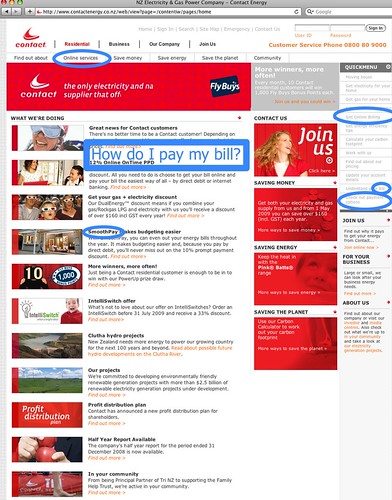
So next I tried contactenergy.co.nz, and had more luck. well – at least I managed to get the right company, but I struggled to find how to pay amidst the sea of red. None of the circled links said “pay your bill”, and the amount of red together with the tiny font size made the whole page quite frustrating.

Contact Energy

I tried the most likely link, and got this, which talks about switching from paper to electronic billing. I have a simple rule though – if I cannot pay my bill online easily then I will probably have a lousy experience with online delivered invoices. This was very true with both Vodafone NZ and Telstra in Australia.
Contact Energy

So I went back to the home page, and tried another link. This page talked about direct debit (too much trouble to set up) and smoothing pay (too much trouble again), but maybe the link on the bottom under “other ways to pay” will help?

Contact Energy

Well, as it turns out, no. It seems that I simply cannot pay my overduepayimmediatelyorwewilldisconnectyourgasforceyoutohavecoldshowers bill on the Contact Energy website – I have to jump through hoops at my bank to do so. (My bank is BNZ, and their hoops involve that stupid netguard card.)
Contact Energy

It would have been nice to provide inks to the banks, phone numbers for the telebanking, and most of all, the 0800 number for calling to pay by credit card. Sure there is a Customer Service number on top of the page – but can I use it to pay my bill by credit card?

So overall Contact Energy has failed to help me pay my bill and pay it now, and I headed off to BNZ’s site feeling more than a little frustrated.

I’ve placed a phrase on top of the page in the above screenshot that I suggest they put on the website until this problem is sorted.

And sort it they can. Let’s head to Western Australia to see how to do this properly. Synergy is WA’s largest retailer, apparently, and being from Australia and a giant company you’d expect them to be pretty backward.
Indeed they are – they don’t believe in monthly billing (it’s every 2 or 3 months), but they do understand that making it easy for you to pay is important. There are two prominent links from their home page:
Contact Energy

Click on the top link, and you get a popup and the ability to pay instantly. Simply enter a payment number from your bill, your credit card number and amount. There’s no security required – if someone wants to pay your bill by entering your number, then good for them. You can also overpay your bill (as I usually do) so that you don’t have to go through the hassle of paying next month.

Synergy Energy

So how about it Contact? Until Powershop moves into gas (which is tough) I guess we are stuck together.

I’m 100% Irish

While I was at Webstock I signed up online for the 23andme service – which takes a saliva sample, analyzes your DNA and tells you all about yourself.

I got the results very rapidly, went into the system and determined that I don’t have too many dread diseases risks linked with my genotype. Then I ignored it until today.

Today I decided to find out where I am from.

First up – I’m 100% European.
23andme

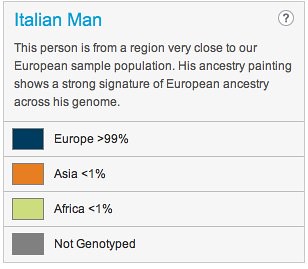
That seems relatively rare – a sample Italian man has a little Asia and Africa mixed in – less than 1% of each, while the sample Japanese was 100% Japanese.
Check out the sample African American woman – a healthy mix of backgrounds – which makes for, you’d think, a much more robust system.
23andme
Then I found that you could narrow in your search. I’m the green blob in Europe in this chart:
23andme

When I zoomed in, I found the Emerald Isle.
23andme
Not a lot of English in the sample – they are in Red. To make sure I zoomed in again – definitely Ireland.
23andme

So I’ll have some Guinness tonight.

Next up I took a health survey – and compared my results to others on the site.

Apparently having your tonsils out (which was common amongst my generation) is classified as ‘head surgery’, but I’m not alone on the 23andme site.
23andme

Actually – it’s a pretty skewed bunch on the site – I suppose there are not many ‘normal’ people that are willing to pay the $500 or so. Almost half have heart issues
23andme
A third are nuts (in the Croc Dundee sense)
23andme
and I’m not sure what to make of this:
23anme

For the gene nerds (and my family) beneath the fold are the descriptions pertaining to the Maternal and Paternal lines. It’s fascinating stuff – well for me anyway.

Continue reading “I’m 100% Irish”

Tuesday Three: 3 ways to improve your business

Focus on the big things, not the little things

  1. Focus effort on removing the primary bottleneck in your process. That means stop working on anything that isn’t the current or next bottleneck or business as usual. And I mean everything.
    This is the secret sauce behind the turnarounds that I and talented small teams have led at two large refineries, and is a great standard approach to any turnaround (you generally start with looking for where the money is disappearing to and stop that, then move to the bottlenecks to increase revenue).
    To make it work you need to understand your process end to end – from understanding the gap in the market/customer needs that you are trying to fill, all the way through product development, production and distribution. You also need to look hard at pricing, but that’s for another day.
    A refinery is easy – all you need to concentrate on is improving the production process, and so you look at each of the big steps to see where the constraint it, and then you dive into that area, pareto the potential fixes and do the bigest easiest ones – and so on.
    For most companies in tough economic times the constraint is going to be ‘not enough sales’ – meaning that production capacity is idle. It’s common right now to see sales to existing customers off by about 30%, but it is also common to see the solution – good companies are investing in sales (which generally means people) and acquiring new customers to fill the gaps. This bodes well down the track when average sales per customer rebound.
  2. Pay your best people well – very well. If they leave then it will cost you a lot more to search for someone new and get them up to speed.
    These days it is hard to find the cash to pay people well – so pay them in incentives and equity. Let them share your vision of a boom once the current tough times have gone, and let them share in the spoils. They may even be willing to take a drop in cash earnings for a decent stake. Be generous though – your success is conditional on theirs.
  3. Stack it high and watch it fly – focus efforts on the biggest selling items, and push to sell even more of them.
    This is the basic pareto rule – 80% comes from 20%. Sure you need to develop new products, and other products could have higher margins, but this is about focusing your energies on selling the things that are easiest to sell. You’ll maximise your sales dollars, and can find longer run efficiencies on the production side. It’s also more fun to watch higher volumes move.

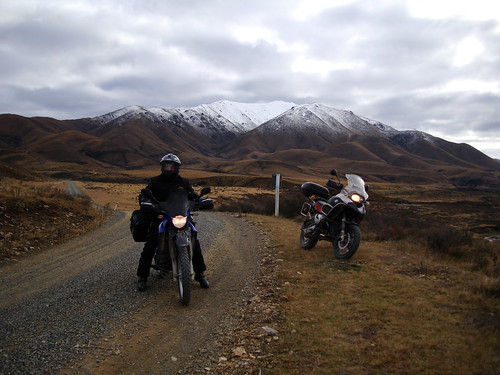
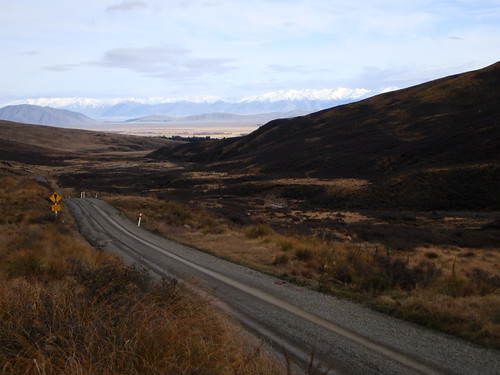
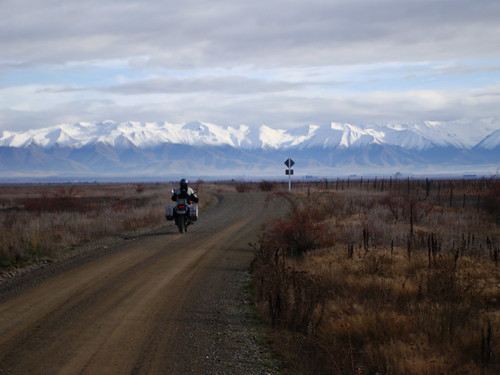
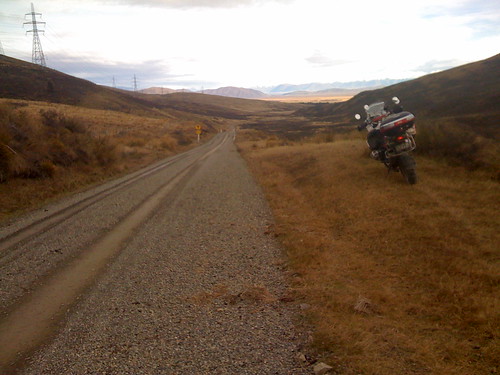
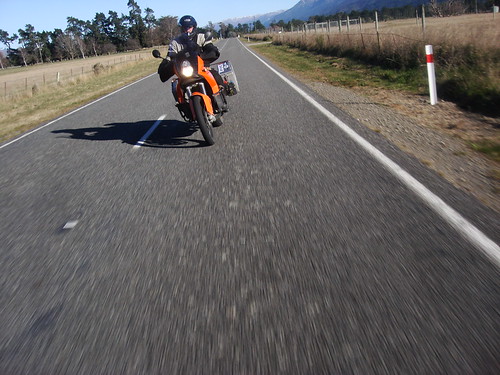
Brass Monkey 2009 – a photolog

The reprobates meet for another Brass Monkey

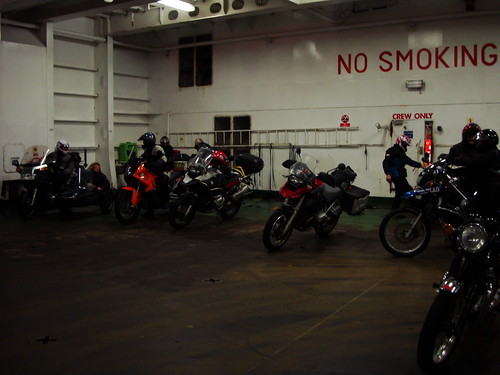
Tying down the bikes in the Ferry

Glassy smooth crossing. A good sign – we could have forgone tying those bikes as well..

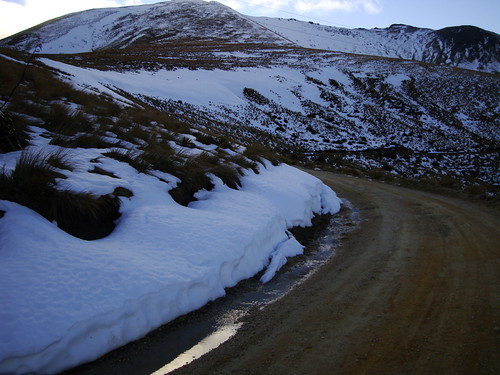
South of Blenheim – it was cold.

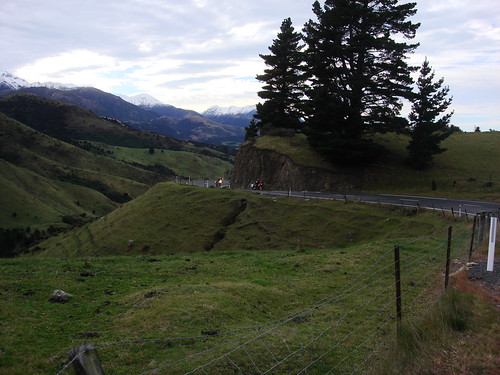
We live in a beautiful place

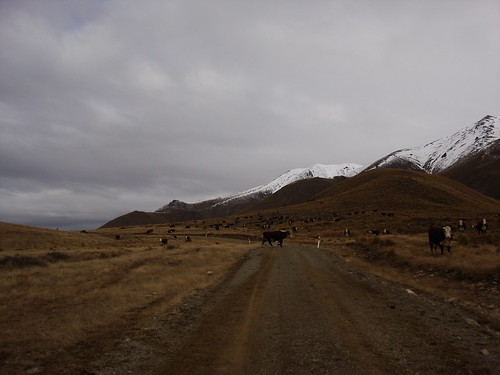
Posing cattle

Bliss

Kaikoura inland road

Hamner Springs – we stopped for the hot pools

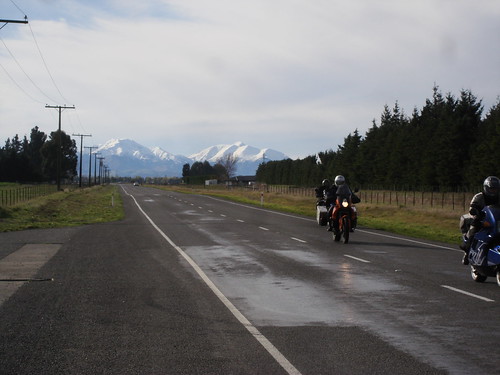
En Route to Geraldine

Challenging mist nearing Fairlie.

Evidence that I was actually up at dawn. As were we all. We stayed in a house on a farm and the dawn say white mountains along with the usual rural scenes.

From an old small bulldozer?

Almost ready to set out to the Haka and Dansies

A chance encounter on the Hakataramea Pass

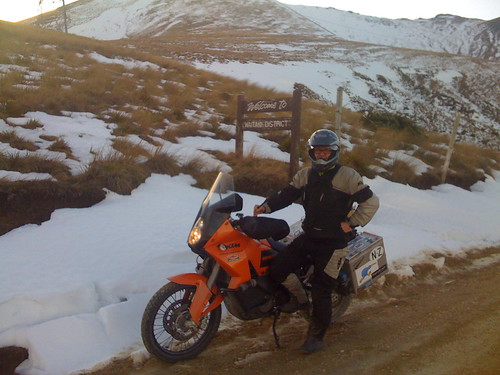
Top of the Hakataramea Pass

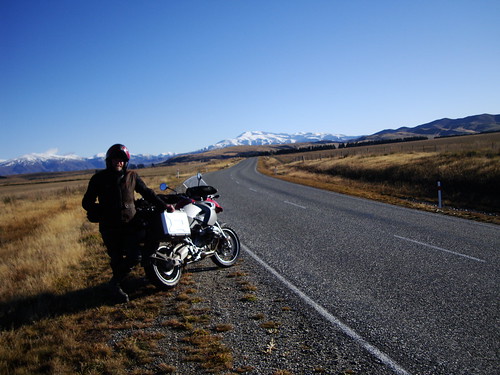
What it is all about

Lake Benmore – an excursion from the Hakataramea Pass

End of the Road at Lake Benmore

Emerging from Benmore

Off to the rest of the Hakataramea Pass

Traffic was a nightmare.

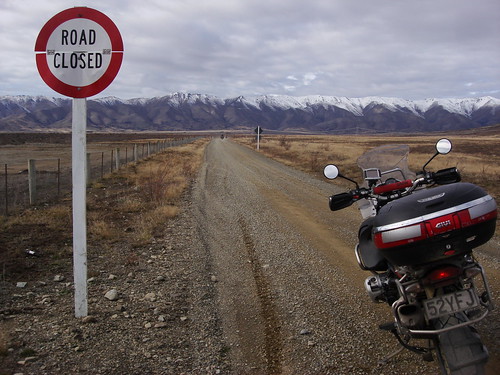
That’s Mod and Henry in the distance – on the closed road

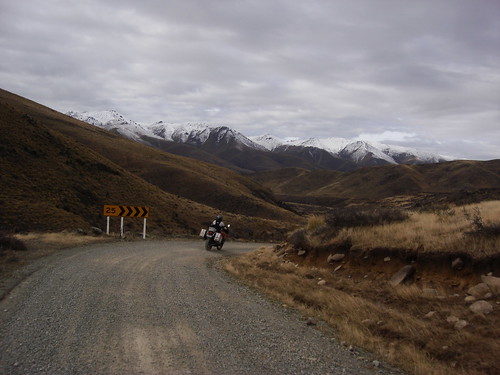
Watch out ahead

Gravel, corners, mountains. What more is there?

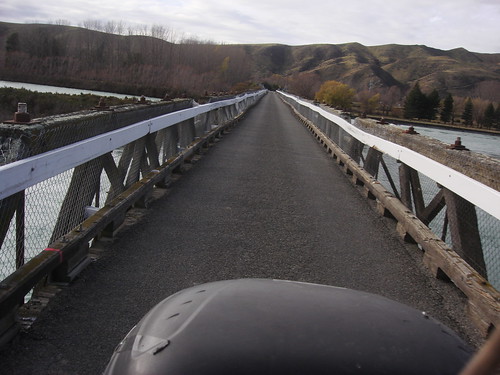
Looking back over a bridge

The entire day was offroad, and with views like this

Top of the Danseys pass. No white stuff on the road though.

Top of the Danseys posing

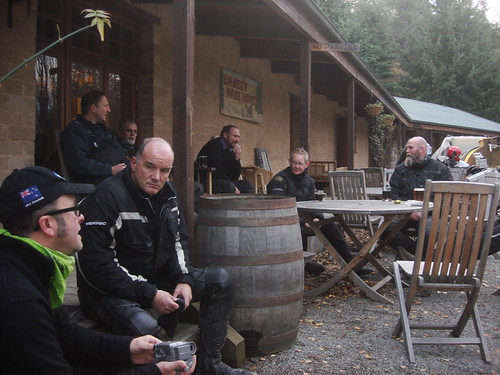
The Danseys pub

The reward

Another Dansey’s bike. Plenty of road bikes went over the Danseys, but the Haka pass has some water hazards that keep most bikes out.

Official Class of 2009 photo

Monkey Saturday – and Nash poses in perfect weather. Again.

However he was soon riding into a sea of fog

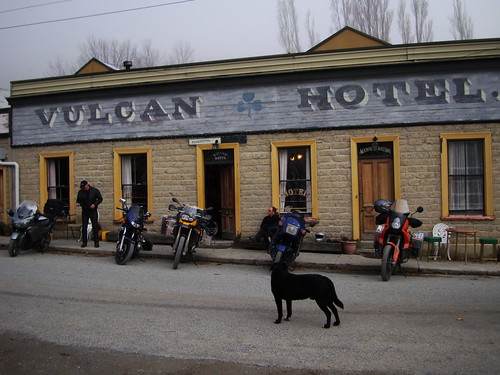
Tour of the monkey area started at the Vulcan Hotel.

We were surrounded by fog

and suffered though some Monkey hardships

Random stretched bicycle later that day

The lake at the rally site

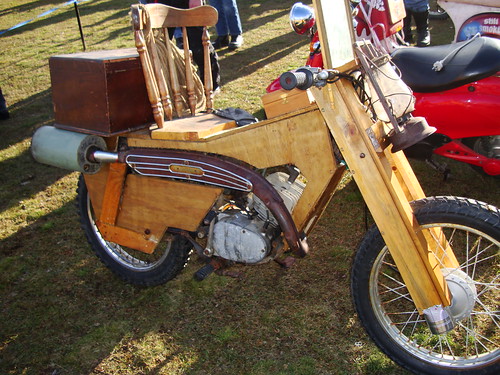
A wooden bike at the monkey

The wooden bike seemed to have less than total efficiency

Sunset at the rally

Ready for the fire. It was freezing cold – and could have been lit earlier.

Finally – flames and heat

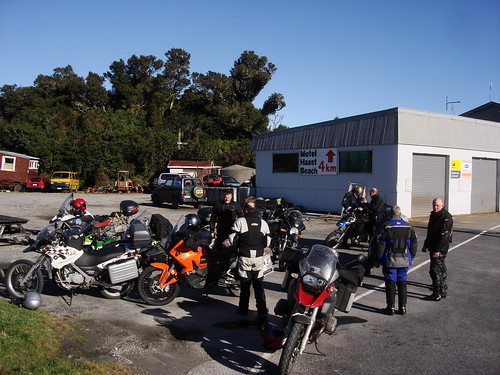
An agglomeration of bikers after an epic run over the Hasst. It was the right route as everywhere else saw ice and snow.

Indeed it was a perfect day on the West Coast – while it snowed in Christchurch. And Wellington. and everywhere else.

The dam could break – with 1 to 2% probability per year. Encouraging.

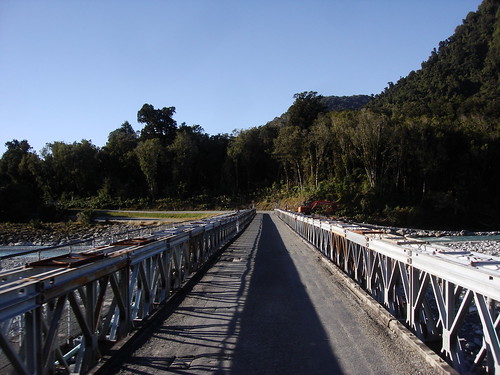
Another one way bridge

Flat rocks at Punakaiki – the end of another wonderful day.

It’s off to the ferry – and yes that’s dawn over there.

An icy run through the Buller gorge. Actually the roads were perfect, though the air temperature hit minus 4.5 degrees Celsius.

Mod tries to evade the camera in perfect conditions –  as we near Blenheim.

On the Ferry home – a rough but fun crossing

What a welcome home to Wellington.

The Fail of Bing. And google.

Like everyone else I have been trying out Bing.com – Microsofts “new” search engine.

It’s useless.

Here is the result page for “buy car” – with “pages from New Zealand selected”.

Bing
Firstly it is difficult to see where the advertisements stop and the results start. On my giant screen the yellow is white, while the format of the ads looks the same as the results. I feel that Bing is trying to trick me into clicking on the ads.

Secondly all of the advertisements are Australian – except for hapless Yellow.co.nz that is still buying traffic for some bizarre reason.

Thirdly they manage to miss that Trade Me is (by a considerable margin) the biggest car market in New Zealand. Zillion and Autotrader are markets, but what the heck is Manheim Fowles doing in 7th place, and why does BuyRight get such play?

Trade Me actually does pop up further down  on the list, coming in at 16th place with the car seats category, and in 21st place with ride on toys category. Meanwhile Turners home page scrapes into 31st spot – both results are far too low to be useful.

Similarly searching for “Buy iPod” gets a bunch of useless Australian ads, but it does get Trade Me and Apple NZ in the top three – a win. Those two stores are almost certainly the biggest online sellers of iPods in New Zealand. However theboysdownunder.com are certainly not, and the page shown is a deep link special offer – so what are they doing in the #2 slot?

Bing

Finally I ran the “buy car” search on Google.co.nz – and was astonished to find that they too fail to pick that Trade Me is the marketplace for cars here. They also didn’t pick up Turners auctions, though Turners managed to buy the prime advertising position.

Google, of course, gets the delineation between advertising and results right – with a darker background, slight indentation and different format for that top Turners advertisement. The rest of the results are reasonable as well.
Trade Me

So – what have we learned?
Firstly yet again the lesson is to never brag about a new search site until it actually works. Cuil is probably still out there – but nobody cares.
Next – Microsoft still doesn’t get it. But we knew that. At least I don’t have the visceral negative reaction to Bing that I do to the Windows Live brand.

Finally even Google gets it wrong sometimes. Sure Trade Me can do a better job on SEO, but they simply don’t need to any more as everyone knows that’s where you go.

Back to the nineties sites like metacrawler were the way to go – passing your search phrase to several engines at once, as they all sucked to one extent or the other. The along came Google, which actually worked, and everything else faded away.

It’s still clear that Google is still vastly better than anything else out there, so I simply don’t understand why you’d use anything else at the moment.

When to resign from a board

Over at the SEC is an excellent letter from Richard E Middlekauff – who just resigned from the board of Heelys, Inc – a shoe company.

Here’s why:

1: The shareholders are not maximising their return after the company was in play.

The Board, in my opinion, should seriously engage potential buyers of the Company, unlike it did with Skechers USA, Inc. last year, in order to maximize the Company’s value for its stockholders.  I do not see the Company achieving this as a stand alone company.  Unfortunately, it appears that the majority of the Board charted a different course, giving scant attention to the offers from Skechers and other third party prospective buyers, and instead pursued an untimely and expensive restructuring of the Company by installing management having no actual experience in the shoe industry.

..My feeling is that CSW is not considering offers for the acquisition of the Company in a manner consistent with Delaware law.  I understand that CSW has its own internal issues with its stockholders; however, that should not cloud its fiduciary duties to the Company.  Any intentions regarding the Company in connection with any stock buy-back or plans to take the Company private should be disclosed to the Company’s stockholders as required by federal securities laws.

2: The board was not being consulted for important decisions

As a Board member, I have often not been consulted in advance of significant management decisions.

3: The board was given insufficient information and time to make decisions

I often did not receive sufficient information to properly prepare for meaningful participation in Board meetings to properly evaluate the information in connection with addressing critical matters affecting the Company.

Similarly, the recent Board meeting held on May 12th upset me greatly, but provides a good example of the short shrift treatment of the Board members when each director was given only two (2) minutes to speak on the significant issue of the strategic direction of the Company.  This was most unfair to me personally, as well as any other director who shared a very different point of view from the majority of the Board.

I’ve written about this before – and I’ll reiterate that if you find yourself in any of these situations then get out.

A few fun GM Chapter 11 facts

A quick read of the General Motors Chapter 11 Bankruptcy petition gives some fun facts about the collosal disaster that is GM.

Total Assets: $82.3 Billion

Total Debts: $172.8 Billion. That’s 217% of assets, $90.52 billion in net debt and bigger than the GDP of New Zealand.

  • How did it get this far?

The biggest trade debt ($121.5m) is to advertising agency Starcom. (They are the 6th biggest unsecured creditor, after big bond holders and employees). Meanwhile Publicis Groupe went for $25.3m, Interpublic for $16m and McCann Erickson for $4.6m. That’s $167.4m in total advertising agency debt.

  • If your biggest supplier is an advertising agency, wouldn’t you begin to suspect that there is a disconnect between your advertised messages and your products?
  • How did you measure the impact of your advertising spend?

Meanwhile metal suppliers US Steel, Arcelor Mittal and AK Steel Holding Group all managed to keep their debt under $10m.

  • How come they were so smart and Starcom et. al so dumb to be left holding the bag? Starcom in particular is looking pretty stupid.

GM owed Enterprise Rent a Car $33m, Avis $12m, Hertz $8.7m – for a total of $53.7m.

  • Was GM really paying rental car companies to take their cars?
  • Why did rental car companies give their customers crappy GM cars that have higher maintenance costs and lower lives (versus say Toyota’s)? Was that doing the right thing or taking the money and damn the customer?

Bottom of the list of top 50 unsecured creditors are consultants Cap Gemini – with $4.4m in trade debt.

  • How much did they save GM for that $4.4m consideration?
  • If they are such good consultants, then how come they didn’t get their money up front?
  • What other consultants were used in the last, say, 10 years? How much did that cost, and what did they make/save for GM?

I’m glad GM is in Chapter 11 (refinance and trade out) – it’s the right thing to do, though I do feel that a full blown Chapter 7 (close it down and divide the pieces) is the better option. GM has become to bloated, is crippled with legacy staff and pension issues and makes vehicles which are amusingly ugly, woefully inefficient and mired in the past.

Tuesday Three: 3 ways to improve your business

Give the people what they want

  1. Go through your Microsoft receipts line by line – and systematically reduce it to zero. Give this task to the palid looking guy who looks after your servers and databases.
  2. Abandon PCs – and get Apple Macs for everybody. People will start wanting to come to work again, and a whole lot of the computing pain will be gone.
  3. Go 24 – upgrade everyone to 24 inch monitors, with a few, such as graphic designers, coders but not CEOs and IT managers, to 30 inches. Watch productivity soar

Leaving for the Brass

Be prepared. The experienced motorcycle adventurer knows that it pays dividends to pack light, prepare well in advance and do a shake down run.

Me – well I am a bit different.

Not only was it a mad scramble to finish packing and get to the ferry, but I
struggled to cram my gear into the box on the back of the bike – meaning I am carrying too much. I left behind a couple of bulky icebreaker jerseys (I hope it isn’t cold down South) and forced the lid down.

Then I realized I had forgotten to pack the vital Single Malt – so I rushed upstairs and grabbed a nice little Islay.

That meant I was now running desperately late for the ferry, so off I set.

Only to turn around after 600 meters to go and pick up my sunglasses.

And then I was off again – arriving at the ferry about 20 minutes before departure. Check in was a breeze, but sadly I’d had no time to fill the tank, and I was now on reserve.

So I was late, overloaded and low on gas. Situation normal.

And then I discovered that I was actually early. An hour early. Grrr.

So rather than waiting in the rain, and then eating the traditional pie for lunch, I headed off for much tastier fare at the nearby French cafe.

A great way to start, and then I met up with some disreptuable characters and we boarded.

South Island here we come.

Want to motorcycle the world? It’s easy

This DVD intro gives a taste for the sort of person that you need to be to ride the world. Assemble your personal excuses, and then watch. (Hint – age and even Parkinsons won’t cut it. Neither will lack of use of a limb, no money, no motorcycle license, gender (ha!), no experience and so forth)

Vodpod videos no longer available.

You can get the DVD over at HorizonsUnlimited, which is the website for people that don’t know how to turn their motorcycle around.

How NOT to Twitter if you are a corporation

A little while back I praised Vodafone New Zealand for their excellent Twittering, inside an article on How to Twitter if you are a Corporation. They reached out to customers, solved problems, gently nudged opinion their way and generally were liked by everybody.

The account was run by Paul Brislen – who let his own account lie idle while he put himself into the Twittersphere.

And then something happened.

Vodafone decided to launch a campaign where “3G Guy” tours New Zealand giving away new net books. A great idea.

Unfortunately rather than using @3Gguy or similar to promote the tour, Vodafone instead passed the respected @vodafoneNZ account over to a pimply youth – 3Gguy.

The results are a fascinating case study.

Twitter

The audience split into three – those that liked the competition (including new followers), those who saw a corporate PR account turn into a spamming machine, and the silent.

Unfortunately the second category contains many opinion leaders, journalists, web industry stalwarts and telco industry commentators.

Twitter

While Paul Brislen re-opened his own account, and many people went off to follow him, many more have decided to unfollow @vodafonenz. The net goodwill is negative, and it now leaves @vodafonenz well behind the previously slightly less respected but still very well run @telecomnz team. As Twitter goes, so to the brands and companies.

Twitter

So what are the lessons here?

Lesson one:

Twittering is better done by individuals, but when those individuals leave and are replaced by folks that don’t get it, their followers may leave with them. If they are disgruntled then the damage could be severe. (So be nice to Paul)

Lesson two:

Keep the promotion and PR accounts separate from each other. The PR account should point to promotions, but not run them. People will find the account that helps them get free stuff very quickly.
Twitter

Lesson three:

When your audience reacts negatively – do something. The most frustrating thing about this promotion is the feeling that our Twitter friend, Paul Brislen, has been taken over against his will (my theory, not at all backed up by any fact) by out of control cluless marketing lunatics. It’s as if we now see the real Vodafone coming through – a Vodafone that doesn’t listen, that steamrolls over opposition and that has lost all the goodwill that Paul built up. It’s sad.

Twitter

What Vodafone should do is simple – accept and acknowledge the error, move the 3Gguy twitter stream to his own account and put Paul back on (exclusively) the @vodafonenz account. Vodafone also need to learn from Paul, and take his guidance on how to run his account going forward.

So let’s have a look at the Twitter stream damage. It’s pretty fun actually, like watching a slow motion train wreck* in action.  *one where nobody is on the train

Here’s a recent page of @vodafonenz mentions from my Tweekdeck. I’ve helpfully colour-coded the tweets. Orange refers to the competition website being broken, Green is a customer service request, and Red are negative comments about the campaign and Vodafone. I’ve named the boxes for the colour blind and those that don’t read this bit and just want the pictures:

But wait – there is more – a lot more, under the fold I have pulled out some of the latest (mostly) negative twitters about Vodafone.

<update – But first – an ad break!

>

There’s also @vfNZno3Gguy, which retweets all the @vodafoneNZ and @paulBrislen tweets that are not about the promotion. If that isn’t a cluestick enough then there is no hope.

Continue reading “How NOT to Twitter if you are a corporation”