This is the second in a series on Warranties – the first was Never buy the Warranty – Repairing is cheap
So now let’s look at the option of self-repair.
These days most people have never learned how to take things to pieces and put them back together again. But that’s pretty much all the average service center does – run a diagnostic, remove and replace the affected module and test to make sure everything is ok.
The main logic board from my MacBook Pro in the previous post was replaced as a unit, rather than the removing and replacing the handful of affected chips. While the replacement chips may be very cheap, removing and replacing surface mounted devices on a modern printed circuit board is not easy. It is difficult to ensure the quality is consistent across the service network, but most importantly it is much quicker for the service centers to simply swap out the board. So service centers take the more efficient but far less sustainable and cheap approach.
In the PC software world it is the equivalent of “delete everything and reinstall Windows” – it’s easy to do and takes very little time for the service center. In the automobile world it’s when they replace the entire lamp unit for $500 rather than plastic welding or replacing the cracked lens for $10.
This approach works well for the customer if they have little time and lots of money, or if the are covered by a warranty. That unfortunately is not always true – warranties often do not cover common reasons for failure (try driving your car into a tree and claiming on your warranty), they expire and they may apply to a different geography.
Let’s take some examples where there was lots of time, and little money – and no warranty.
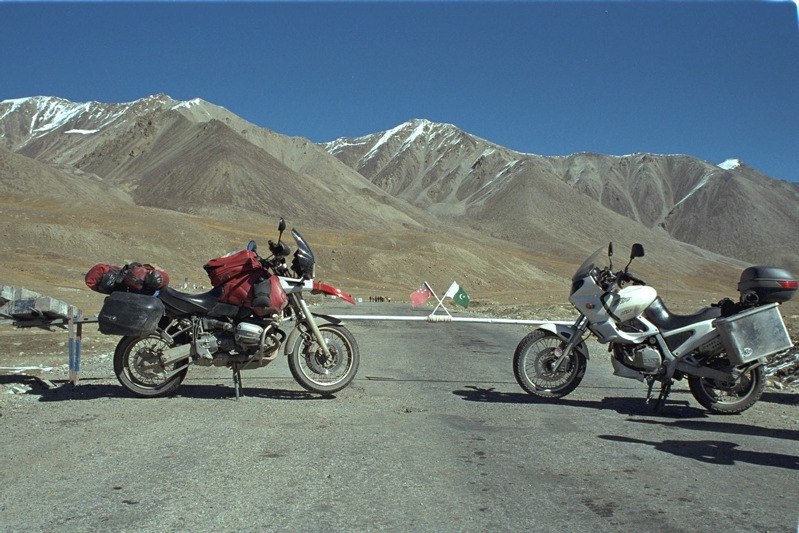
I was motorcycling in Pakistan, and met up with a chap who I’d been chasing since Istanbul. It seemed we both liked traveling rather quickly, and it would be good to share a road. We met near the top of the Karakorum Highway, where Pakistan borders with China – that’s me on the while F650ST.


On the way back to Gilgit, my new friend’s gear change mechanism broke. This wasn’t the clutch – but a very complicated piece of metal that connected the lever that you use to change gear with your foot to the gearbox itself. It was a forged piece, beautifully designed and manufactured, and clearly very expensive to replace. We were also in the far reaches of Pakistan – a long long way from Germany.
We were not concerned – I suggested that we ride to Gilgit and there he could probably find someone to replicate the part – in function if not in quite the form. Luckily he was in 2nd gear and on a very capable 1100GS – and we were able to continue zooming back. When we got there he managed to not only find someone to make the part, but it was done within a day and for just a few dollars. It lasted for the remainder of his trip.
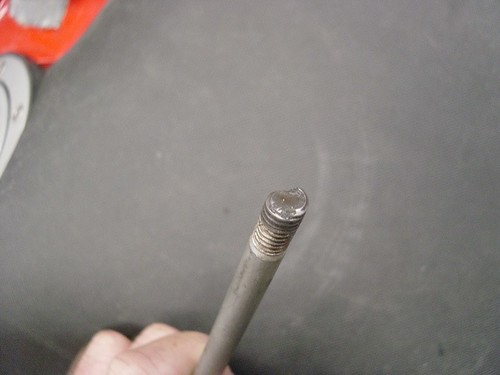
In South America I had a few similar experiences, though nothing so dramatic. Once again something broke – this time one of the not-so-structural but still very important frame bolts on my bike.

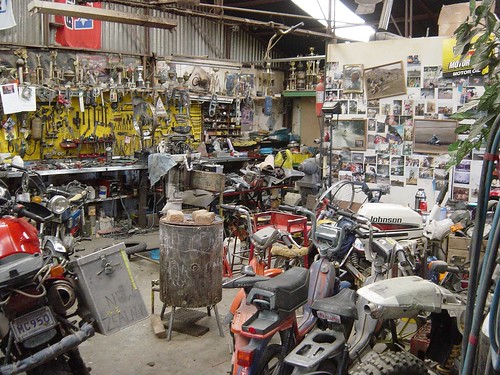
It was going to be tough to replace, but when I walked into Moto Pablo – I knew I was fine.

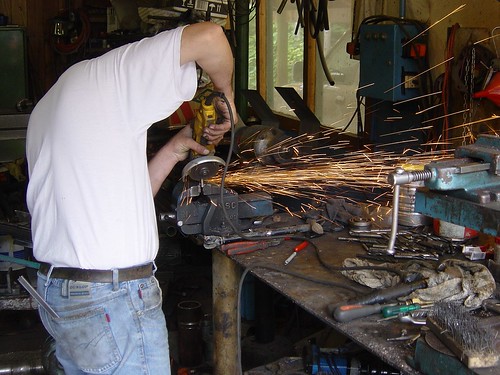
You may laugh – but that chaotic workshop was a sign that the folks that work there could do anything, and indeed they did. They won’t win any 5-S awards for work layout, and their HSEC standards were a little dubious:

But it got fixed – and it stayed fixed.
But let’s move on from the gratuitous motorcycling shots, and to a more topical example. While, err, motorcycling in South America, I carried a Dell Laptop. It was a reliable beast, even in the vibrating bike, but one time I placed it into the boxes the wrong way (next to the bolts), and next time I turned it on the screen was dark.
That meant I had to either connect to an external monitor or pretty much go off memorized keystrokes to save all my photos. After a little investigation online I determined that the Cold Cathode Tube that lights to screen had most likely broken. I took it all to bits, and sure enough that was the case. The normal approach when this happens is to replace the entire screen – a very expensive proposition, especially for a computer that was riding around in the back of a motorcycle for two years, and thus liable to break at any time.
So when I got to Mendoza, in Argentina, I ordered a replacement tube, and when I returned a bit later it had arrived. This time I got expert help from a local dealer – and he took it to pieces, replaced the tube (ok – I was hovering a bit) and voila – it all worked. He also replaced the hard disk drive, which, not surprisingly, was beginning to sound like a tractor.
Here we are after the event – me with the husband and wife team. They were amazing.


It cost a relatively trivial amount, but it did take a lot of time to sort out. The hardest part was finding someone to send the part to – and that was these guys.
I’m close now to an excuse to put in one of my favorite photos, so let me reiterate the overall point – if the warranty is expired, and the cost of repair is extraordinarily high, then do it yourself. If it’s too complicated for you (and you should really just try pulling it to pieces) then find someone unofficial that can do it for you.
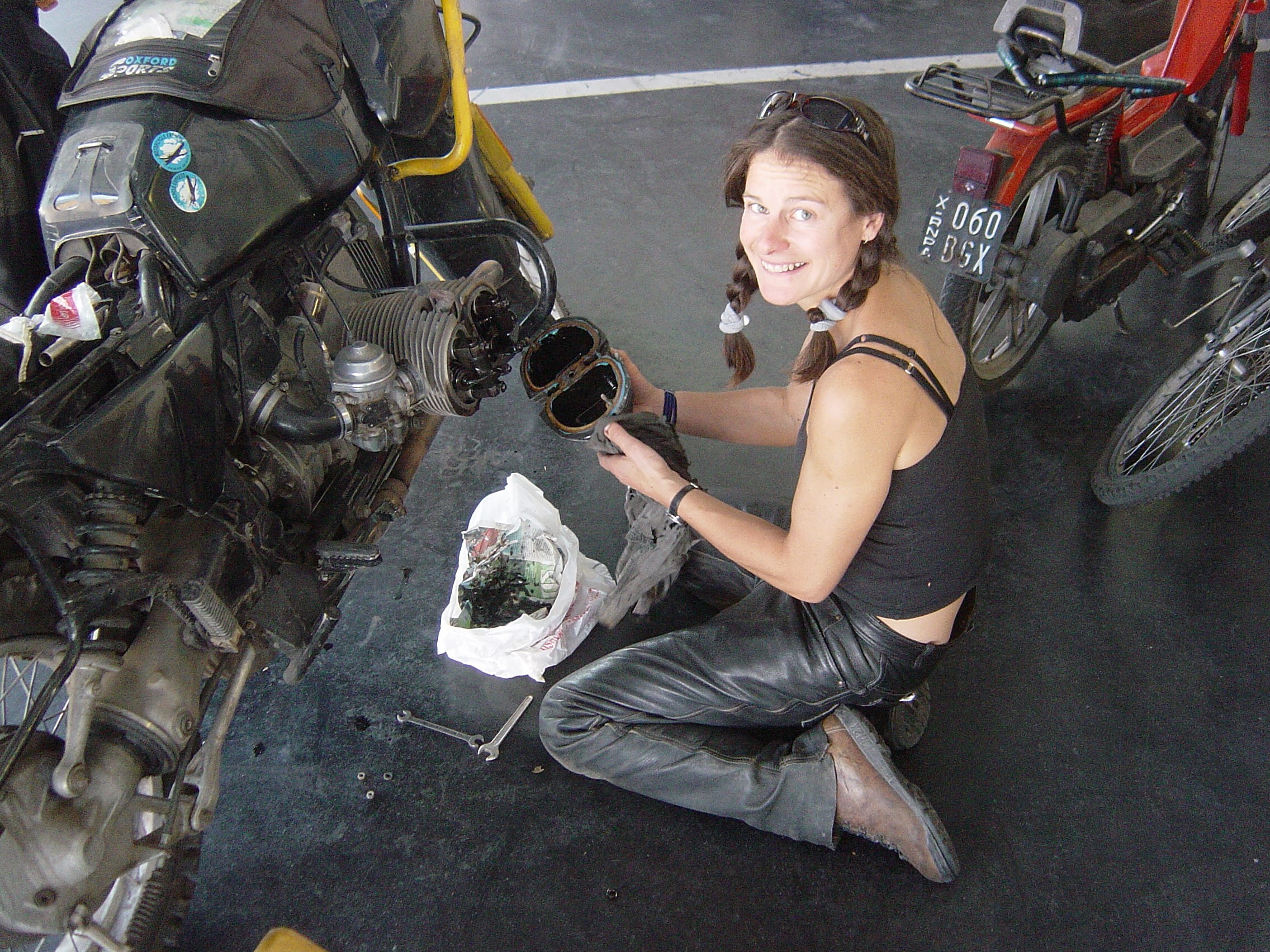
Here’s round the worlder Tiffany doing some running repairs to her bike Thelma – a frighteningly common occurrence. The bolts that hold on the cover in her hands eventually ripped away from the bike, and so she subsequently had to get a grizzly old man in Cordoba to make more permanent repairs, but she kept the bike going for thousands of miles before that.

You don’t have to have a fancy workshop – Tiffany is on the street in the above shot, and Mamasita (as we called her) on the Salar de Uyuni trip I followed on my bike managed to feed about 15 of us each night with delicious 3 course meals – and this was her kitchen.

I have no excuse for this photographic journey through prior travels while discussing warranties. It’s just that I was sorting through old photos today. However the examples are salient, and the points are clear:
1: First try to fix it yourself – the internet is a remarkable source of answers to almost all breakdowns, and taking things to bit is fun.
2: If you fail to fix it then go to a dealer. Ask them to look at it, but don’t spend too much, and walk away if their quote is too high.
3: If the dealer quote is high, then find the cheap unofficial alternative. If you are lucky enough to be in a third world country then this will be easy. If not then look for young and old people that like tinkerng – they have plenty of time and curious minds.
4: Most of the time the repair can be cheap. If it isn’t then you are probably doing something wrong, or it’s just beyond fixing and time to buy again. If you cannot repair it then at least list it on Trade Me or eBay – there may be someone out there making a business of buying broken widgets, fixing them and selling them on again.
In the process of getting a product fixed we should always keep in mind the replacement cost. If the unit is cheap then you may skip one or more steps, and just replace and move on. It’s not the most sustainable thing to do, and you miss out on the fun of trying to fix it yourself. But do make sure you give someone else a shot at repair by selling or placing it in a recycle facility.
In the next Never buy the Warranty piece I’ll discuss the cost of those warranties. I think you know how that will turn out.



















 Lance Wiggs